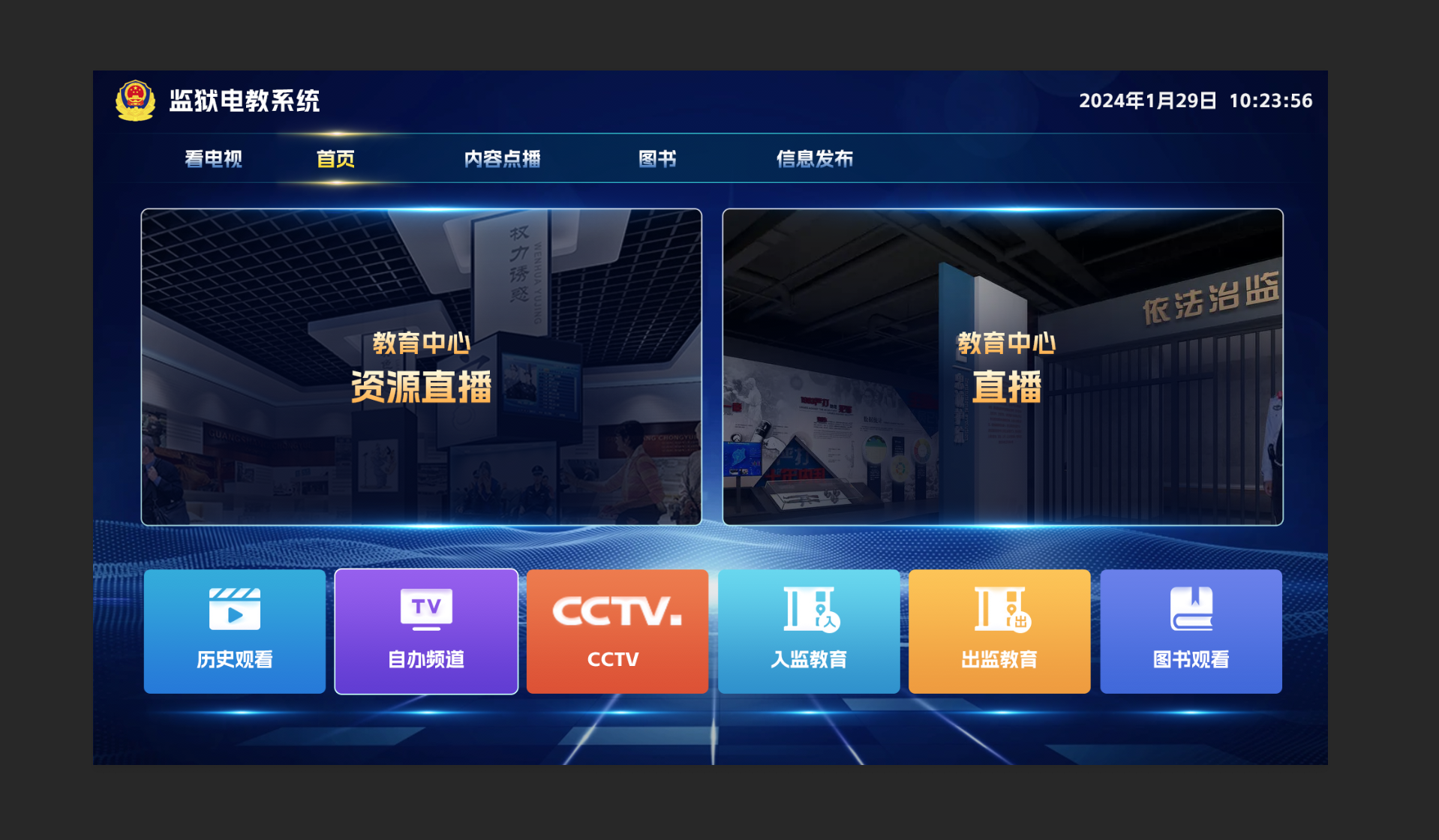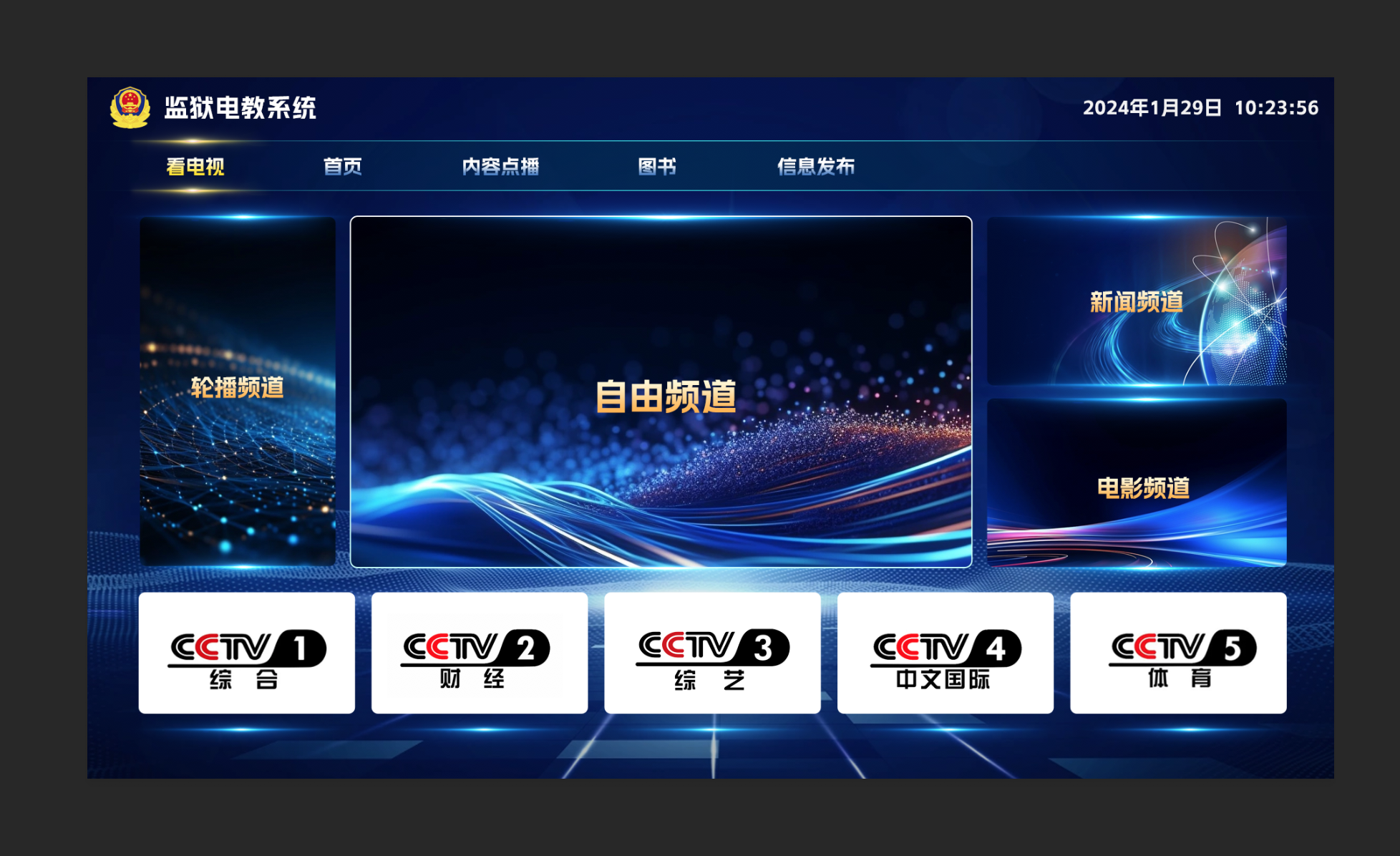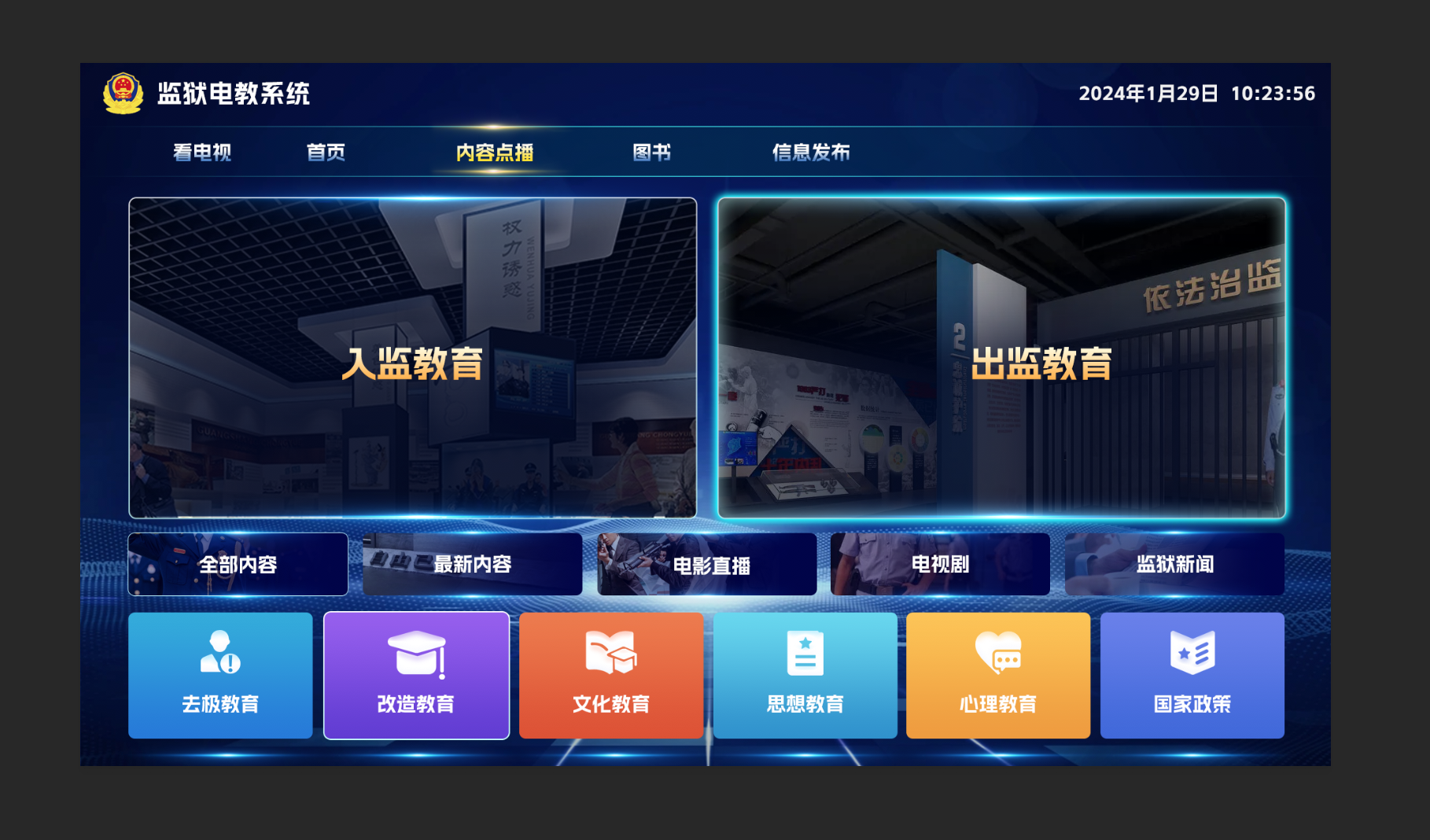


The regulations on prison education and reform issued by the Ministry of Justice stipulate in Article 36 that "prisons shall establish an audio-visual education system and a broadcasting room, and each sub-prison area shall be equipped with televisions, organizing criminals to listen to and watch news and other radio, film, and television programs beneficial to the reform of criminals." Currently, most prison audio-visual education systems are built by broadcasting and television network companies, which can only achieve passive education, and data cannot be shared between prisons.
Addressing the current pain points of prison audio-visual education, Chengdu Weitong Information Technology Co., Ltd. has developed a brand-new prison audio-visual education system, which features the following unique functions:
1. Resource sharing: The provincial bureau, prisons, and prison areas, as well as other management departments at all levels, can share resources, enabling the sharing of high-quality resources (video-on-demand, live video streaming);
2. Autonomous learning: Provide diversified learning methods, offer prisoners opportunities for autonomous learning, and promote mutual enhancement and complementarity between active and passive learning forms;
3. Intelligent feedback: Based on intelligent video analysis and big data analysis, provide intelligent feedback on the effectiveness of teaching level transformation and automated analysis of dangerous behaviors, enhance the teaching supervision ability of management personnel, and establish a teaching transformation feedback mechanism;
4. Educational integration: Implementing an active teaching point system management, unifying teaching content and passive teaching course plan broadcasting, synchronizing teaching progress, facilitating interconnected teaching and bidirectional online education, and ensuring unified teaching quality;
5. Centralization of Education: A two-level control model, where the provincial bureau can centrally manage prison education across the entire province, and prisons can uniformly and centrally manage various educational resources, system maintenance, teaching supervision, assessment and evaluation, with unified management, operation and maintenance, and upgrades;