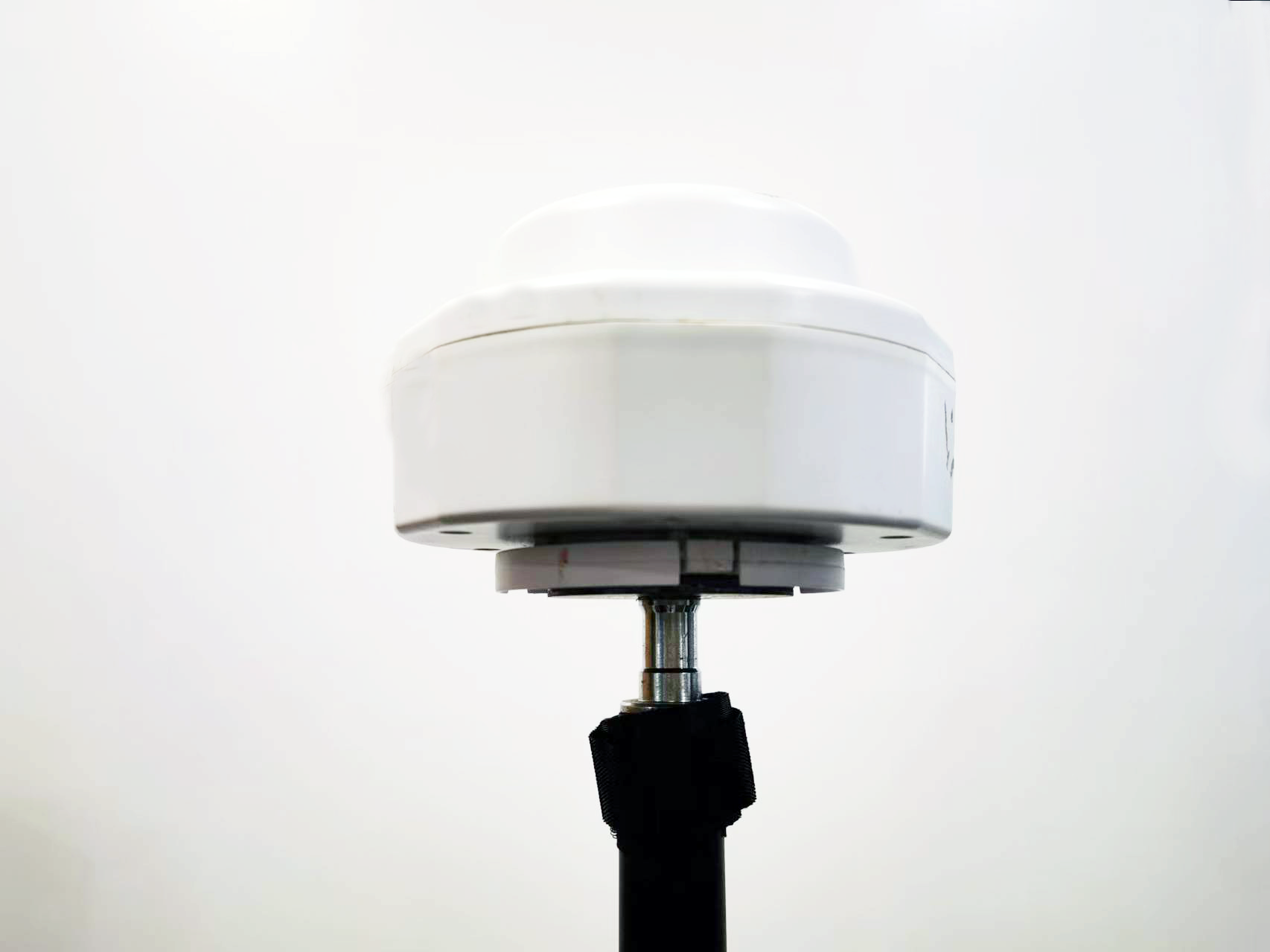


The UWB base station + positioning tag independently developed by Chengdu Weitong Information Technology Co., Ltd. has achieved technological innovation over traditional UWB base stations. Traditional UWB positioning requires multiple base stations for support, but Weitong has adopted an innovative algorithm that allows a single base station to achieve the positioning effect of multiple base stations, with a positioning accuracy of 10-30 centimeters, which will save users half of the cost.
1. What is UWB? UWB (Ultra Wide Band) technology is a new type of wireless communication technology that differs significantly from traditional communication technologies.
In traditional communication systems, data transmission typically requires the use of carrier waves for transmission. However, UWB (Ultra-Wideband) does not rely on carrier waves. Instead, it transmits data by sending and receiving extremely narrow pulses with nanosecond or even sub-nanosecond durations. One information bit can be mapped to hundreds of such pulses.
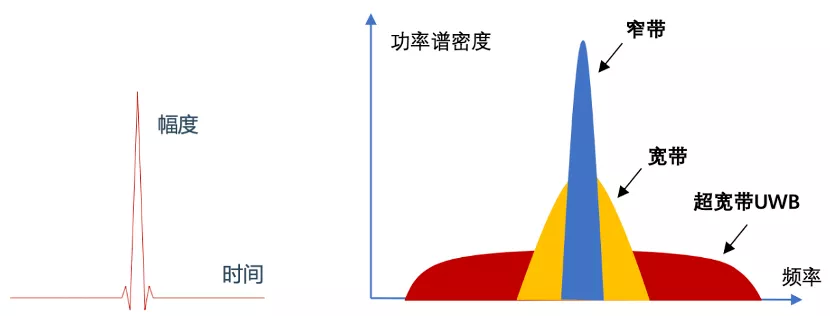
According to the Fourier time-frequency transform rule, the shorter the time-domain width of a single-cycle UWB pulse, the wider the corresponding frequency-domain bandwidth. Such nanosecond-level time-domain pulse signals can often generate frequency-domain bandwidths on the order of GHz, as shown in Figure 1. Therefore, this technology is also known as UWB ultra-wideband technology (in simple terms, it refers to a very large bandwidth). It is these nanosecond-level time-domain pulses that make UWB signals have extremely high temporal resolution, making them highly suitable for high-precision positioning.
II. Technical Features of UWB Positioning 1. High Precision
It possesses centimeter-level high-precision positioning capability. The time domain width of UWB signals is extremely narrow, allowing the receiving end to achieve extremely high time resolution during measurement. Simply put, it means accurate time measurement, which is the foundation for achieving high-precision positioning.
At the same time, it also has strong multipath resistance, making it difficult for signals arriving from different directions to cause overlapping interference, which is also very beneficial for high-precision positioning.
2. Low power consumption
UWB systems transmit data using periodic pulses, which have a very short duration, typically ranging from 0.20ns to 1.5ns, and a very low duty cycle. This eliminates the significant power consumption associated with transmitting continuous carrier waves, thus achieving very low power consumption.
3. High safety
The physical layer technology of UWB communication systems possesses inherent security capabilities. With its wide bandwidth and emission power spectral density lower than noise, the information it carries is drowned in noise, making it highly unlikely to be intercepted or interfered with. Conversely, the probability of affecting other wireless communications (such as WIFI) is also very low. In summary, it neither interferes with others, nor is it easily interfered with by others.
4. Low cost
Deploying a UWB positioning system incurs a certain hardware procurement cost. However, UWB base stations have a wide coverage range, typically with a radius of 50-150 meters. For the same area, fewer devices need to be deployed. Additionally, once the UWB system is deployed and debugged, it requires minimal modifications. With a one-time investment, it can be used for 10 years, resulting in extremely low operating costs.
III. UWB Positioning Network Architecture The entire UWB positioning system primarily comprises four components: UWB positioning tags, UWB positioning base stations, IoT positioning platforms, and application platforms, as illustrated in the figure below:
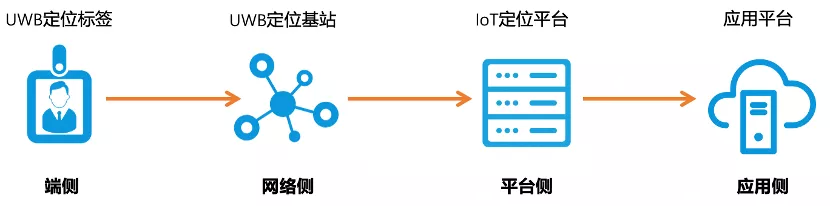
Figure 2: Composition of UWB positioning system
1. UWB positioning tag
UWB positioning tags are carried by target personnel and materials, and they periodically transmit upstream UWB positioning pulse signals. Available in various forms such as badges, helmets, and wristwatches, they are suitable for different application scenarios and feature low power consumption, portability, waterproofing, and dustproofing.
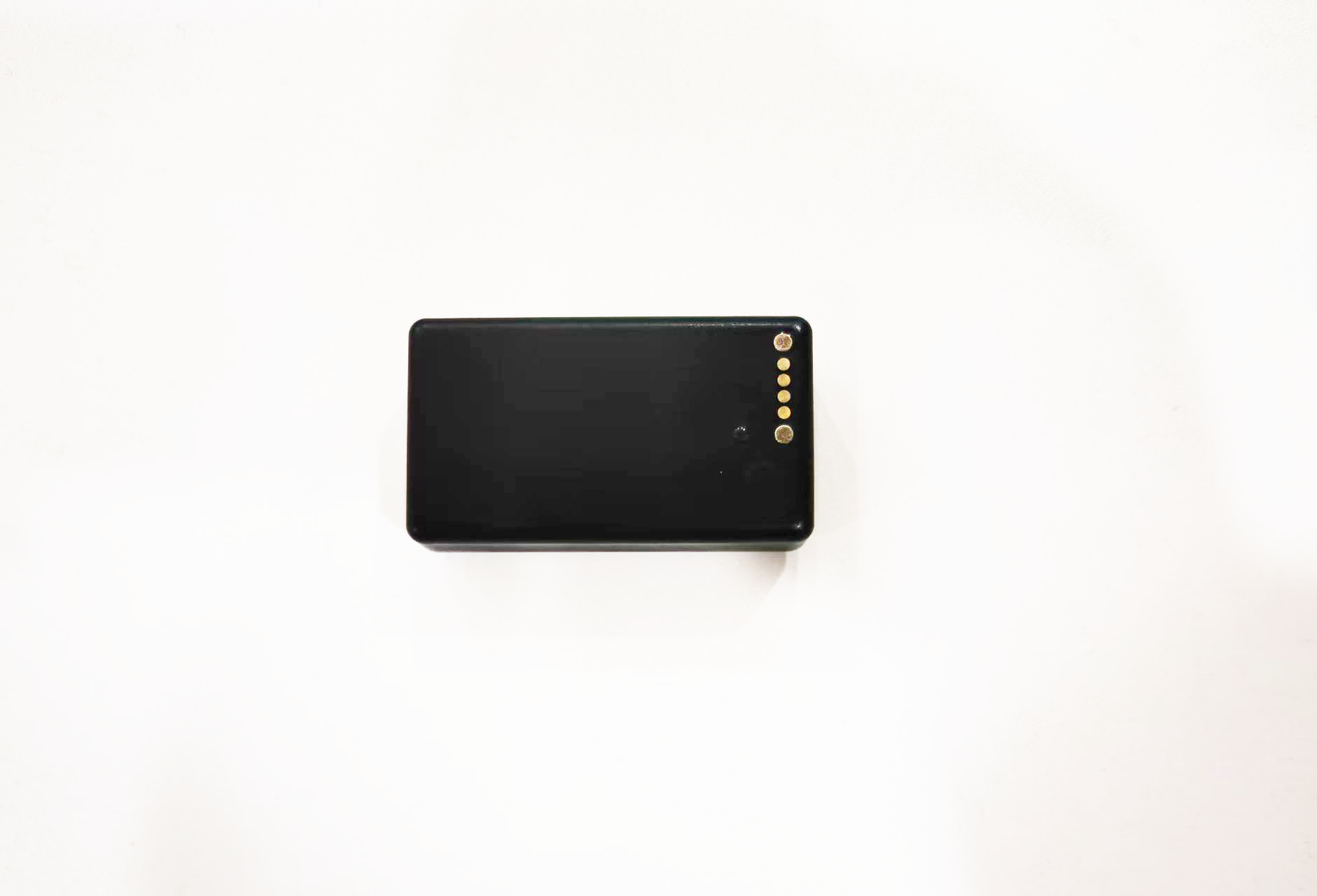
2. UWB positioning base station
UWB positioning base stations are fixedly installed around the environment, receiving and measuring the pulse signals from UWB positioning tags to obtain high-precision positioning data. They come in various forms, including indoor, industrial, and explosion-proof models, and support multiple power supply methods and data interfaces.